
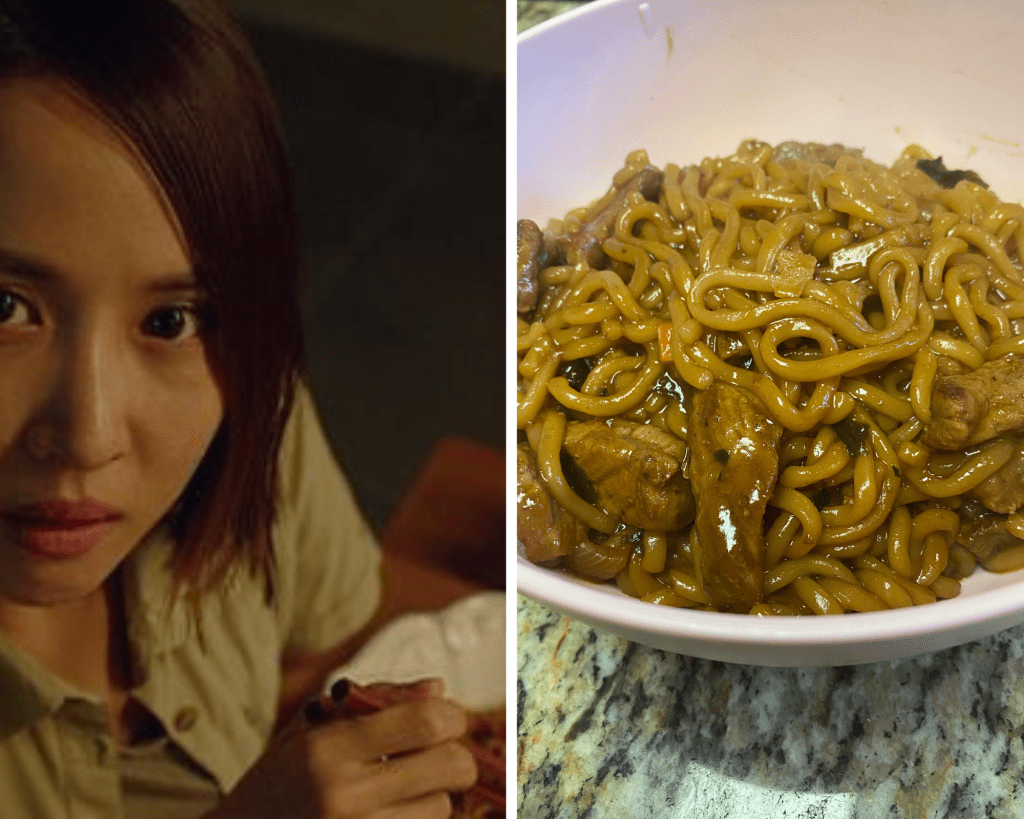
Parasite fans, quick! What was the most iconic part of the movie? For some, it deals with the basement. For others, it was this catchy tune about adopting a false identity. Though for me, the most iconic part of the movie was when I saw ram-don for the first time. I was like, “What is that? That looks good.”
By the way, you should Parasite if you haven’t. It touches on power dynamics based on class between two families, and it’s an interesting film. I give it 7.5/10.
Though regardless of whether you’ve seen it or not, this article won’t contain any spoilers about the plot (I promise), so read on to learn about something new today.
What is ram-don? Ram-don is a Korean dish that consists of ramen and udon noodles. Ram-don is a portmanteau of the words ramen and udon, but that’s the anglicized name for Jjapaguri, its Korean name. Jjapaguri is a portmanteau of instant noodle brands Jjapagetti and Neoguri, and both Jjapagetti and Neoguri noodle packs are used as ingredients for the dish. While Parasite (2019) made “ram-don” (as the subtitles called it) recognizable to international audiences, it existed years before the movie entered pre-production (read about its history via South China Morning Post). Albeit, it was more of a secret menu item amongst Korean military troops.
The jjapaguri featured in Parasite is not fully representative of homemade jjapaguri in Korean households. However, what better way to explore elements of other cultures than through movies? Cultural exchange is very powerful through media, and I credit Parasite for creatively incorporating a dish like “ram-don” into its plot. As someone interested in other cultures’ cuisines, it made a powerful impression on me.
For the rest of this article (and to honor original names), I’m going to solely call ram-don by its Korean name, jjapaguri. And now that I’ve given some background about what jjapaguri is, let’s talk about my experiences remaking it. From the moment I first saw it on Parasite, I knew that I would make it myself in the future. I wasn’t exactly sure when, but I knew I’d do it when I got the opportunity. The time range could’ve ranged from weeks to years, but anyways moving right along.
When I saw Jjapagetti and Neoguri noodle packs at a Walmart near my hometown, I got so excited. I said, “Those are the noodles needed to create that dish from Parasite.” Although I’m an adult now, behavioral etiquette from childhood sticks with you. Thus, I asked my mother if I could buy the noodles. Unsurprisingly, she allowed me to buy them since I had money with me. That was really all I needed to get for jjapaguri. The seasoning would come from the small pouches inside each noodle pack, so there was no need to buy any additional spices. Steak was already prepared at home too, so there was no need to buy it either. I intended to cook jjapaguri that same day, and after having an afternoon rest, I walked into the kitchen and began the cooking.
One good thing about jjapaguri is that it doesn’t take long to make. This was especially true since I had seasoned steak on standby. Following the classic cooking rule, I gathered all the ingredients before starting to cook. While the photo shows a bulb of garlic, I ended up not needing a clove from it. It turns out garlic wasn’t part of the recipe, and I thought it was at that moment. Anyways, let’s pretend that bulb was there just for decoration. Although the steak was the last thing to go into the jjapaguri, it was the first thing cooked on the stove. Since you have to be mindful of meat, it’s best to cook it ahead of time in any recipe before moving on to the lighter stages.
Since I had to boil water, I decided to do that while cooking the steak the rest of the way. And then when the steak was ready and the water had successfully boiled, it was time to insert the Jjapagetti and Neoguri noodles. My oh my that was the fun part! You have no idea how satisfying it is to see instant noodles separate whilst stirring them in hot water. I would love to see ASMR compilations of that. Though if they already exist, please send them my way.
After the noodles became al dente (as I assumed), it was time to pour out half the noodle water. For me, it was hard to estimate when I poured out that amount. However, I did the best I could considering that I am still a novice at cooking my own meals.
Even so, pouring out water was the segue to the much easier part: adding seasoning. The recipe said to use all the Jjapagetti seasoning and only half of the Neoguri seasoning. Though because the jjapaguri was bland after doing so, I decided to add the rest of the Neoguri seasoning. Several minutes of stirring and simmering later, it was time to stir in the steak cubes. That was really satisfying to me, because that concluded the cooking process!
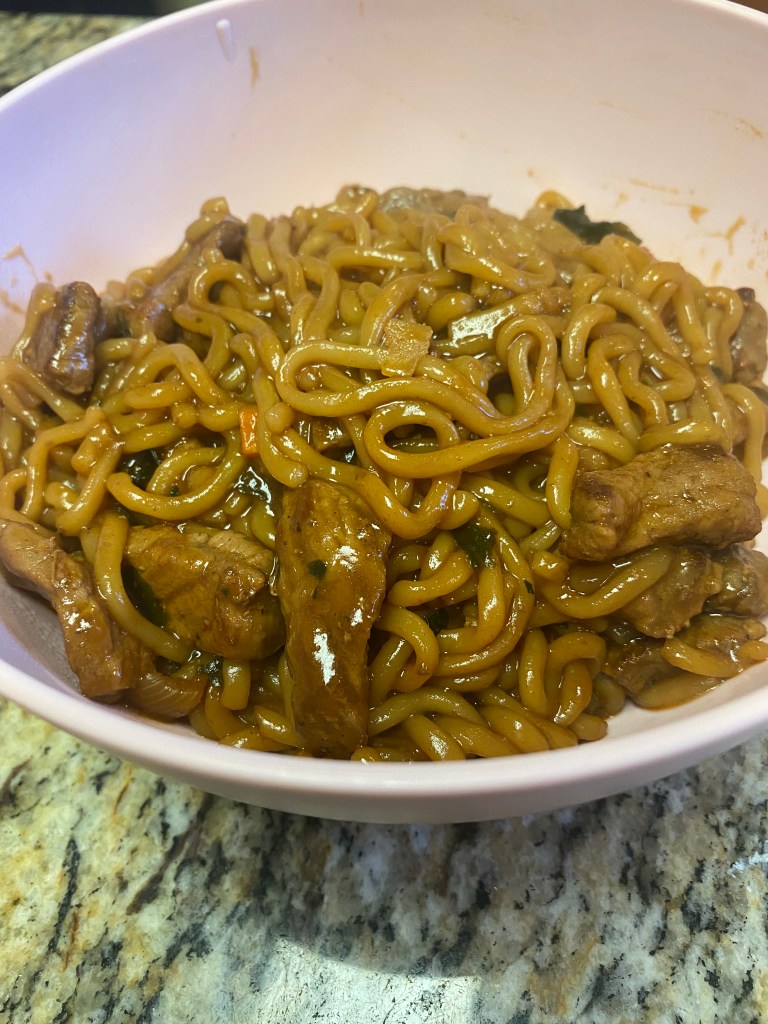
And then the moment of truth: the taste! THE TASTE TASTE TASTE! Surprisingly, my mother was interested in trying jjapaguri with me. She doesn’t know about the movie Parasite, nor is she adventurous with trying different foods. However, it was convenient for her to have a bowl of jjapaguri since I made it myself. If I bought it from a restaurant, she would probably have a bite and then pass. Though how about we applaud my mother for being the secondary taster? I love it, because that verified my opinions and there’s nothing wrong with having a taster alongside you.
I’ll be honest. The jjapaguri was tame at first. As I stated two paragraphs ago, I had to add all of the Neoguri seasoning to intensify flavor. Even then, the flavor was rather mild. That surprised me, because I was expecting to taste more spice than that. Not necessarily as spicy as Buldak noodles (that gave me dragon’s breath), but more than mild nonetheless. The noodle and steak textures compliment each other. Though one aspect that my mother and I agreed on was that there could’ve been much more flavor. It would’ve been smart to add vegetables like cabbage and carrots to jjapaguri. As for the noodles, more authentic packaged noodles could’ve been used instead of instant noodles.
Of course I didn’t do any additional steps, because I wanted to have Parasite’s version of jjapaguri. However, I will not use any instant noodles in the next jjapaguri I make. Instead, I will use packaged, more authentic noodles from the store and incorporate seasonings straight from the cabinet. Seriously, I believe jjapaguri would taste much better fresh, and there are recipes for fresh jjapaguri out there. If you are an instant noodle lover or would love to try a different instant noodle dish, go ahead and make Parasite’s jjapaguri. Though if you don’t like instant noodles, you’re better off making jjapaguri from scratch and avoiding the processed nature of it. Either way, it’s worth trying just for kicks.
If you haven’t seen Parasite, have a night where you make jjapaguri and eat it while you watch the movie. That way, you are not only watching a Korean movie, but you are also trying a Korean dish. That’s a learning experience that’s hands-on and visual, and you can’t beat a multifaceted approach to cultural engagement.
Link to recipe (courtesy of Kimchimari): https://kimchimari.com/ram-don-jjapaguri-movie-parasite/
 kristasoyyo.com
Leave a comment